An extensive survey by Optimizely, encompassing over 2,000 B2B marketers globally, has revealed a significant disconnect between the widespread adoption of Artificial Intelligence (AI) in marketing and its effective implementation. While nearly half of these professionals report that AI is fully integrated into their daily workflows, a stark reality emerges: most are dedicating substantial weekly hours to rectifying AI-generated content, navigating disparate tool ecosystems, and compensating for operational processes that lag behind technological advancements. The core challenge, therefore, is not the willingness to adopt AI, but the intricate process of making it function seamlessly and efficiently within existing marketing frameworks.

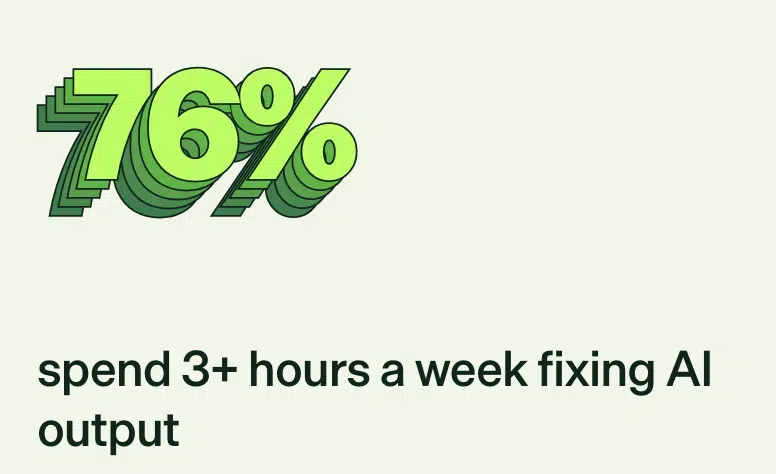
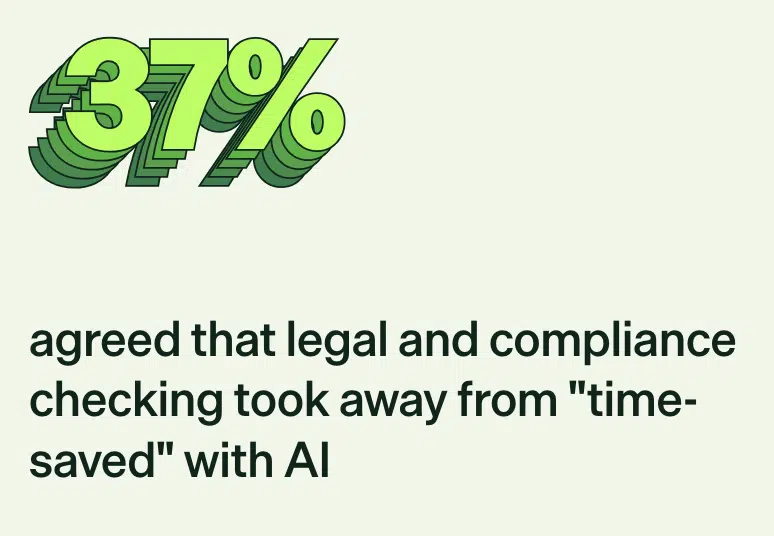
The promise of AI in marketing was largely centered on enhanced efficiency and productivity gains. However, the Optimizely report, titled "The State of AI in Marketing," indicates that the current reality is far more complex. A staggering three-quarters of respondents admit to spending at least three hours each week on tasks such as editing, fact-checking, or correcting AI-generated content. This time expenditure is often consumed by issues like AI "hallucinations" (generating inaccurate or nonsensical information), the cumbersome manual process of copy-pasting data between disconnected tools, and the necessary legal or compliance reviews. Alarmingly, only a mere 4% of marketers globally feel that AI genuinely saves them time across the entire content creation lifecycle.
AI Creates New Work Instead of Eliminating It
The burden of AI integration appears to be disproportionately felt outside the United States. While globally only 4% of marketers find that AI streamlines every stage of content production, their U.S. counterparts exhibit a noticeably higher degree of confidence in the quality of AI output. Specifically, 39% of U.S. marketers believe that most AI-generated content is usable with minimal editing, a figure that drops to 28% when considering the global response.
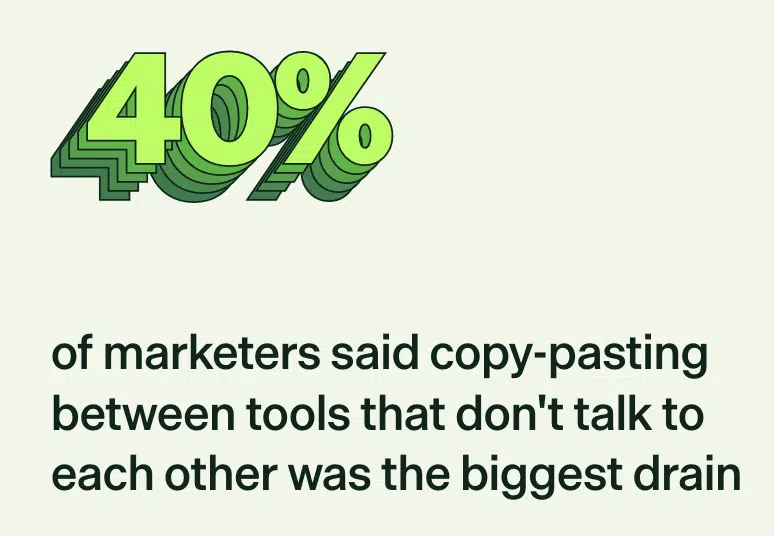
These findings underscore a critical shift: AI has not so much eliminated work as it has redefined it. While the initial generation of content might be faster, the subsequent stages of quality control, adherence to brand guidelines, and overall workflow coordination now demand a greater allocation of human effort and attention. Much of this amplified workload is directly attributable to the fragmented nature of the technology stack currently employed by marketing organizations.
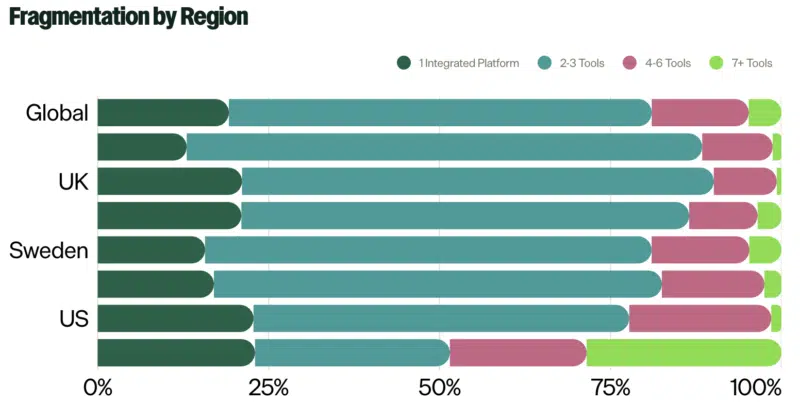
The survey highlights that a mere 19% of respondents utilize a single, integrated AI platform. The vast majority, over 80%, find themselves routinely switching between multiple AI applications. This creates a disjointed and inefficient workflow, compelling marketers to manually transfer information between disparate systems, thereby negating potential time savings and introducing opportunities for error.
Fragmented Technology Amplifies the Problem
These disconnected technological environments pose a significant hurdle to consistent AI governance. Instead of focusing on enhancing customer experiences, teams are compelled to dedicate more time to verifying AI outputs, ensuring legal and regulatory compliance, and maintaining data consistency across various platforms. This operational overhead directly detracts from strategic marketing initiatives.
The Optimizely report also points to AI’s ongoing struggle with a fundamental aspect of marketing: the preservation of brand identity. Over half of the surveyed marketers indicated that while AI is adept at capturing factual information, it frequently fails to replicate the nuanced emotional tone and distinct voice of their brand. Only approximately one-third expressed strong confidence that their AI tools consistently reflect their established brand voice.
Brand Governance Remains a Human Responsibility
Within the United States, marketers demonstrated a slightly higher level of optimism regarding AI’s ability to capture brand resonance. Forty-five percent of U.S. respondents felt highly confident in this regard, compared to about one-third globally. Despite this, a significant 62% of U.S. participants still voiced concerns that AI adoption is inadvertently contributing to a homogenization of brand voices across the industry.
This concern extends beyond individual content pieces. Fifteen percent of respondents indicated that their AI-generated work would be difficult to distinguish from a competitor’s if branding elements were removed. Furthermore, two-thirds expressed apprehension that AI is leading to increasingly similar brand narratives across different organizations. These findings reinforce the notion that content generation is only one facet of the marketing workflow. Maintaining brand differentiation fundamentally relies on astute editorial oversight, robust governance structures, and meticulously managed brand systems, all of which remain firmly within the human domain.
Leaders and Practitioners See AI Differently
A notable disparity has also emerged in the perception of AI’s impact between executive leadership and the marketing practitioners who utilize these tools daily. More than half of the surveyed marketers believe that their leadership underestimates the significant human effort required for effective AI implementation and management. Conversely, C-suite respondents were considerably more inclined to describe themselves as "liberated" by AI and to assert that their organization’s AI implementation strategy is fully aligned with its objectives.
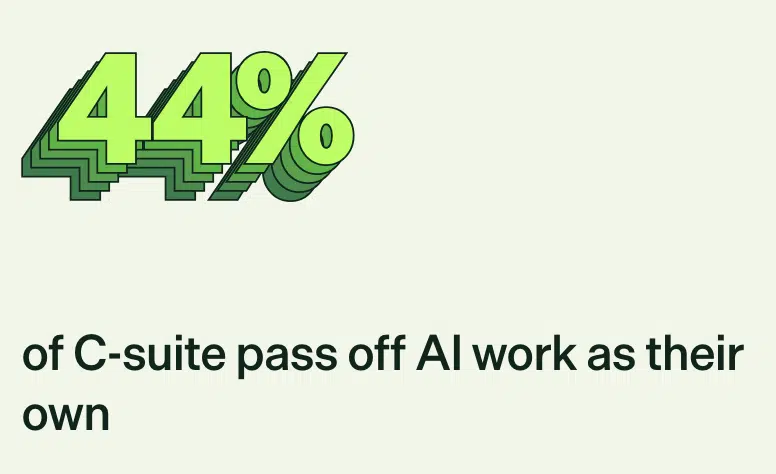
Further insights from the survey reveal differences in practical application and disclosure. A substantial 44% of C-suite respondents admitted to frequently or always submitting AI-generated work without disclosing its origin. Concurrently, one-quarter of marketing leaders acknowledged publishing AI-generated content that they knew deviated from brand guidelines, often to meet pressing deadlines. In the United States, this figure rises to one in three. These behaviors, rather than indicating isolated governance failures, collectively illustrate the operational pressures marketers face as AI adoption outpaces the development of supporting processes and infrastructure.
Adoption is No Longer the Challenge
Perhaps the most striking revelation from the Optimizely report is the sentiment among marketing leaders regarding their current AI strategies. A significant 65% of marketing leaders indicated they would consider pausing their AI rollout for a 90-day period to reassess and refine their approach. This figure underscores a widespread sentiment that current implementations are not on the optimal trajectory, with only 35% believing their organization’s AI deployment is proceeding effectively.
While it is important to acknowledge that vendor-sponsored research may reflect marketer perceptions rather than independently verified productivity metrics, the findings consistently point to a singular theme: marketing organizations have largely embraced AI. The more formidable challenge now lies in building the robust governance frameworks, integrated technology ecosystems, and agile operating models that are essential for making AI a reliable and scalable asset. For enterprise marketers, the true competitive advantage in the current landscape is no longer derived from the mere act of adopting AI, but from the strategic and operational mastery of its implementation.

The implications of these findings are far-reaching. As AI continues to evolve at an unprecedented pace, organizations that fail to bridge the gap between adoption and effective operationalization risk falling behind. This includes not only ensuring the accuracy and compliance of AI-generated content but also safeguarding brand integrity and fostering genuine differentiation in an increasingly automated marketplace. The success of AI in marketing will ultimately hinge on a holistic approach that integrates technology with human expertise, strategic foresight, and a deep understanding of the operational realities on the ground.
The journey from AI adoption to AI mastery is proving to be a complex one, demanding a strategic re-evaluation of workflows, technology stacks, and organizational structures. As marketers navigate this evolving landscape, the focus must shift from simply integrating new tools to building the foundational elements that enable AI to deliver on its promised potential for efficiency and innovation, without compromising the core values and distinctiveness of their brands. The future of marketing success with AI will be determined by those who can effectively operationalize this transformative technology.